
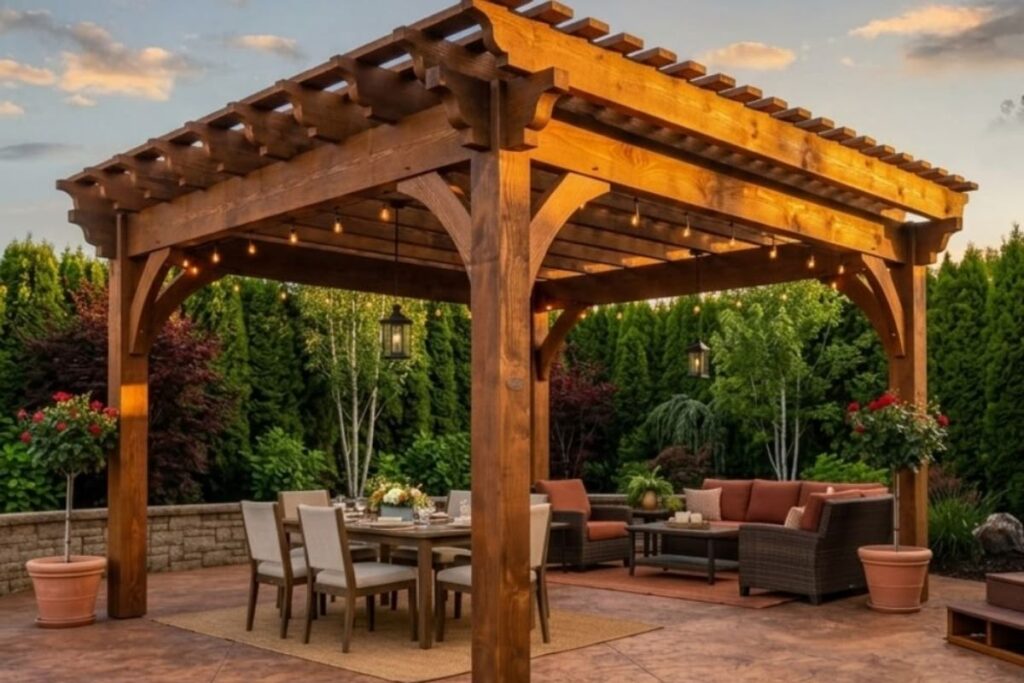
A timber frame pergola brings structure and shade to a backyard without fully closing it off from the sky. The open rafters and exposed joinery give you that classic outdoor living look.
Whether you’re framing a patio, shading a hot tub, or just adding some architectural interest to a flat yard, it helps to know the numbers first. This guide covers what these structures cost in 2026, how they differ from a pavilion, and which wood and design choices actually matter.
What Is a Timber Frame Pergola?
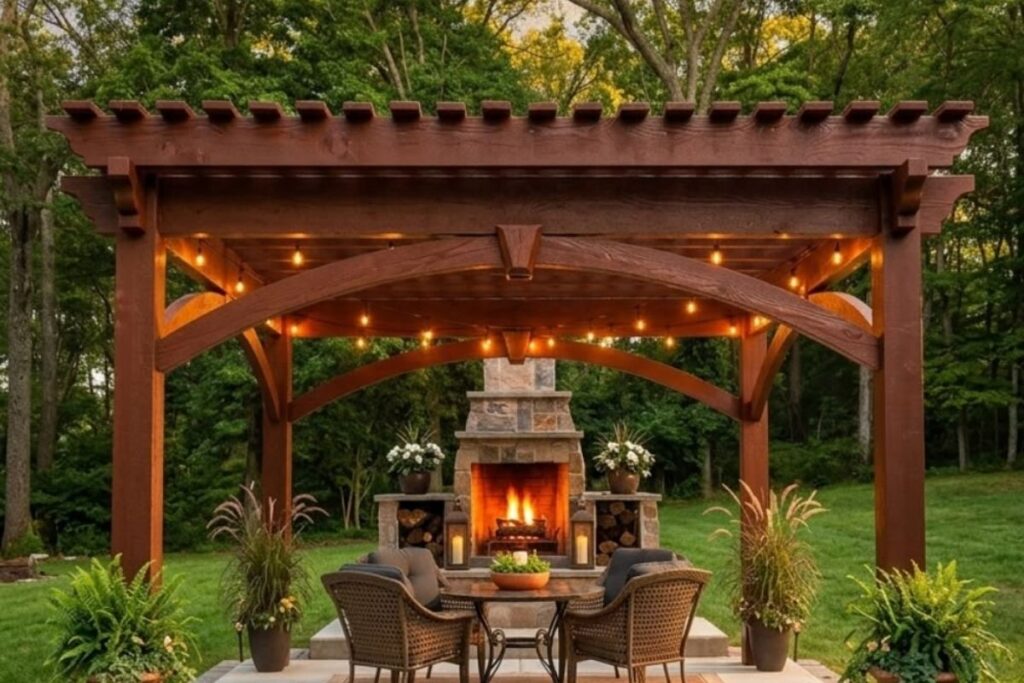
A timber frame pergola is an open-air outdoor structure built from heavy wooden posts and beams. The joinery is traditional mortise and tenon or dovetail work, not metal brackets.
The roof is typically made of evenly spaced rafters or slats. This filters sunlight instead of blocking it completely, which is part of the appeal.
Unlike a standard prefab kit held together with screws, a true timber frame pergola relies on wood-to-wood connections for its strength. That’s why these structures last longer and develop such a distinct, handcrafted look over time.
Timber Frame Pergola vs Pavilion
It’s easy to confuse the two, so it’s worth knowing where the line is. A pergola has an open or partially slatted roof that filters light and offers partial shade.
A pavilion, on the other hand, is fully roofed with solid material. It’s built to provide complete shelter from rain and sun.
If you want a defined outdoor room you can use rain or shine, a pavilion is the better fit. If you want shade and structure for climbing plants or string lights, a pergola does the job beautifully.
How Much Does a Timber Frame Pergola Cost in 2026?
Pricing for a timber frame pergola varies more than you might expect. That’s mostly because “timber frame” covers everything from a simple prefab kit to a fully custom, hand-joined structure.
Typical Cost by Build Type
Here’s a general sense of where pricing lands this year, based on current builder and supplier data.
| Build Type | Typical Cost (10×10 to 12×16) |
| Basic prefab kit | $1,500 – $5,000 |
| Mid-range cedar, professional install | $5,000 – $10,000 |
| Premium timber frame, Douglas fir, traditional joinery | $10,000 – $20,000+ |
| Fully custom, large-span design | $20,000 – $40,000+ |
Most homeowners land somewhere around $6,500 to $12,000 for a solid timber frame build. Larger spans or premium wood species can push that number well past $20,000.
What Drives the Price
Size and span play a major role here. Larger pergolas need more posts, deeper footings, and heavier beams to support the structure.
Wood species matters too. Pressure-treated pine sits at the budget end, while cedar and Douglas fir cost more but last significantly longer.
Joinery complexity adds to the price as well. Simple notched joints cost less than dovetail or mortise and tenon connections with decorative details like curved beams or scrolled ends.
Whether you choose an attached or freestanding design also affects cost. Freestanding pergolas need more posts and footings than attached builds, which lean partly on your home’s existing structure.
Labor typically runs $50 to $120 per hour. A simple kit might take a single day to assemble, while a custom timber frame build can take a crew several days.
Best Wood Options for a Timber Frame Pergola
Wood choice affects price, appearance, and how much maintenance you’ll be doing down the road.
Pressure-Treated Pine
The most affordable option and a common choice for prefab kits. It resists rot and insects reasonably well, but typically needs more frequent sealing or staining.
Cedar
Naturally resistant to rot and insects, cedar has a warm, rich tone that weathers gracefully without much intervention. It costs more than pine but needs less upkeep over time.
Douglas Fir
The go-to choice for premium timber frame builds. Douglas fir offers excellent strength and a straight, clean grain, which makes it a favorite for wider spans.
Attached vs Freestanding Pergolas
This decision affects both your design options and your final cost.
Attached Pergolas
An attached pergola ties into your home’s existing structure. This means fewer posts and a lower material cost overall.
It works well for covering a patio or back porch and creates a natural visual extension of your house.
Freestanding Pergolas
A freestanding design gives you full placement flexibility since it isn’t tied to any existing structure. You’ll need more posts and stronger footings to support it on its own.
This adds to the cost, but you gain the freedom to put it anywhere in your yard.
Roof and Cover Options
The top of your pergola does more than just look good. It determines how much shade and weather protection you actually get.
Open lattice or slats give you the classic pergola look. They offer dappled shade while letting light and air through.
Solid roof panels provide much more shade and some rain protection. This starts to blur the line between a pergola and a pavilion.
A retractable canopy gives you flexibility to open up the sky on a nice day or close it for shade. Motorized versions cost more than manual ones.
Climbing plants offer a low-cost, low-tech option too. They add natural shade over a season or two as vines fill in the open slats.
Add-Ons Worth Considering
Once your frame is up, a few extras can make the space far more usable.
Outdoor lighting is one of the easiest upgrades. String lights or fixed sconces extend how late you can use the space in the evening.
Electrical outlets come in handy for fans, speakers, or seasonal lighting. You won’t need to run extension cords across the yard.
Built-in seating saves you from hauling furniture out every time you want to use the space. It’s a small addition that gets used constantly.
Privacy panels are worth considering too. A few strategically placed slatted panels can block a neighbor’s view without losing the open, airy feel.
How to Plan and Build a Timber Frame Pergola
Whether you’re hiring a builder or assembling a kit, the process generally follows a familiar sequence.
Start by checking local permit requirements. Many areas require a permit for structures over a certain size, particularly anything attached to your home.
From there, decide between an attached or freestanding design based on your space and how you plan to use it. Once that’s settled, choose your wood species and joinery style.
Site prep comes next, including leveling the ground and pouring footings or a concrete pad if your design calls for one.
After the foundation is ready, the posts and beams go up, followed by the rafters and any roofing or cover material. Finishing touches like stain, lighting, and seating come last.
Maintenance Tips for a Timber Frame Pergola
A well-built pergola can last for decades, but a bit of regular care keeps it looking its best.
Plan to reapply stain or sealant every two to three years. Do it more often in harsh sun or coastal climates.
It’s worth checking joints and pegs annually for movement, especially in the first year as the wood settles.
Clearing leaves and debris from the rafters periodically helps prevent moisture buildup. If you’ve added climbing plants, trim them back regularly so they don’t put excess weight on the structure.
Frequently Asked Questions
How long does a timber frame pergola last?
A well-built timber frame pergola, especially one made from cedar or Douglas fir, can last several decades with basic maintenance like periodic resealing.
Do I need a permit for a timber frame pergola?
It depends on your location and the size of the structure. Many cities require a permit for pergolas over a certain square footage, so check with your local building department first.
Is a timber frame pergola worth the extra cost over a basic kit?
For most homeowners, yes. The traditional joinery and quality wood used in a true timber frame build hold up far better over time than a lightweight prefab kit.
Can a pergola be converted into a pavilion later?
In some cases, yes, if the existing frame is structurally rated to support a solid roof. It’s worth discussing this with a builder during the design phase.
Final Thoughts
A timber frame pergola gives you one of the best returns on investment in outdoor living. It blends real craftsmanship with a design that only looks better as it weathers.
Decide early whether you want an attached or freestanding structure, and pick a wood species that matches your climate and budget. Don’t skip on proper footings even if you’re tackling a smaller build.
Get a few quotes, compare what’s actually included, and you’ll end up with a space you’ll use for years.