
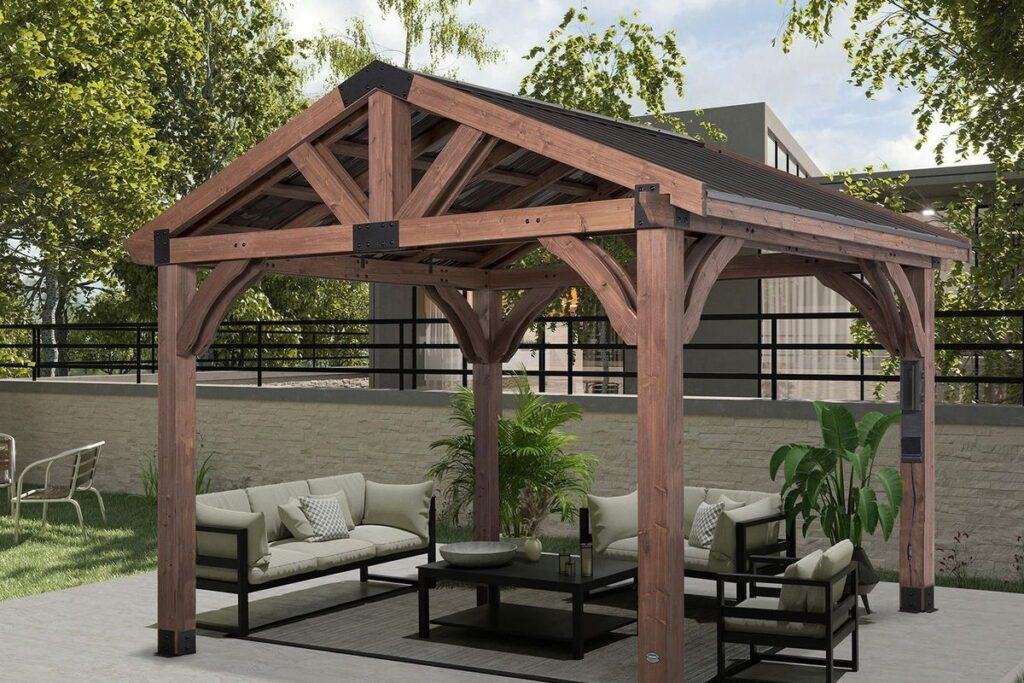
A timber frame pavilion turns an ordinary backyard, park, or event space into somewhere people actually want to gather. The exposed posts and beams give you a structure with real presence, not just a roof on sticks. Before you call a builder or order a kit, you need to know what these structures actually cost in 2026, which wood holds up best, and how the planning process works from start to finish.
What Is a Timber Frame Pavilion?
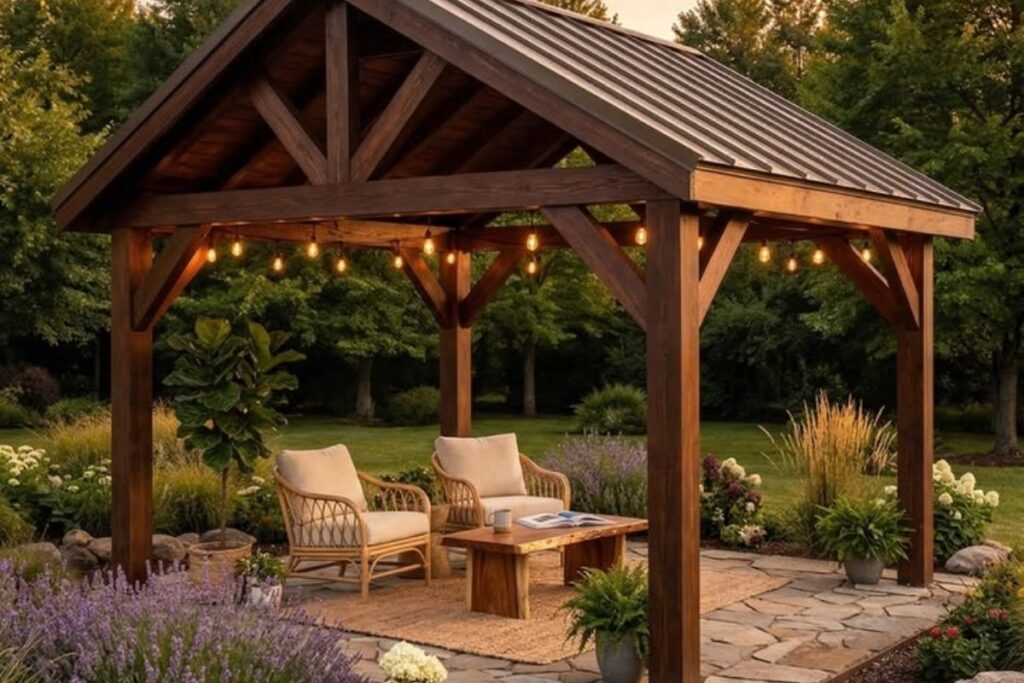
A timber frame pavilion is a freestanding outdoor structure built from heavy wooden posts and beams, joined together using traditional mortise and tenon joinery instead of nails or metal brackets. The wood pegs and interlocking joints are part of the design, not something you hide behind drywall.
This building method dates back centuries, but it has stuck around because it works. The joinery ages well, resists warping, and gives you a structure that can genuinely outlast a stick-built equivalent by decades when it’s maintained properly.
Timber Frame Pavilion vs Pergola vs Gazebo
People mix these terms up constantly, so it helps to know the difference before you start pricing anything out.
- Pavilion: A fully roofed, open-sided structure built for shelter and shade. Posts and beams carry the full weight of the roof.
- Pergola: Typically has an open or partially slatted roof, so it filters light rather than blocking it completely.
- Gazebo: Usually smaller, often octagonal, and sometimes enclosed with screens or railings.
If you want full weather protection for a patio, outdoor kitchen, or event space, a pavilion is almost always the right call.
How Much Does a Timber Frame Pavilion Cost in 2026?
This is the question everyone asks first, and for good reason. Pricing varies a lot based on size, wood species, roofing material, and whether you go with a kit or a fully custom build.
Typical Cost by Size
Here’s a general sense of what homeowners are paying this year, based on current industry pricing across several builders and kit suppliers.
| Pavilion Size | Estimated Installed Cost |
| 10×10 to 12×12 | $12,000 – $19,000 |
| 14×16 | $16,000 – $19,000 |
| 18×24 | $22,000 – $28,000 |
| 20×20 to 24×32 | $32,000 – $48,000 |
| 24×36 and larger, custom/luxury | $50,000 – $100,000+ |
DIY kits without professional installation tend to land on the lower end of these ranges, sometimes as low as $7,000 to $12,000 for smaller designs, since you’re cutting out a big chunk of labor cost.
What Drives the Price
A few factors consistently move the needle on your final quote.
- Size and span: Bigger structures need more support columns, heavier beams, and more timber volume overall.
- Wood species: Eastern white pine is the most budget-friendly option. Douglas fir costs more but resists decay and insects better. Cedar and oak sit at the top of the price range and are usually reserved for custom, high-end builds.
- Roof material: Asphalt shingles are the cheapest route. Standing seam metal costs more upfront but lasts longer and looks sharper.
- Joinery complexity: A simple gable roof with standard king post trusses costs less than a hammerbeam truss or a curved-beam design.
- Site prep: Grading, footings, and concrete work add to your total, especially if your site isn’t already level.
Labor usually makes up 40 to 50 percent of the total cost, covering design, timber milling, joinery, site work, and finishing. Materials account for the remaining 35 to 45 percent.
Best Wood Types for a Timber Frame Pavilion
The wood you choose affects both the look and the lifespan of your pavilion, so it’s worth understanding your options before you commit.
Eastern White Pine
This is the most common choice for a reason. It’s affordable, easy to work with for detailed joinery, and takes stain beautifully. If you want a rustic look without a luxury price tag, pine is your best starting point.
Douglas Fir
Stronger and more naturally resistant to insects and decay than pine, Douglas fir is a popular mid-to-premium option, especially for larger spans that need extra structural strength.
Cedar and Oak
These are the premium choices. Cedar has natural weather resistance and a warm color, while oak brings serious strength and a more formal, traditional look. Both cost significantly more and are usually saved for custom commercial or high-end residential projects.
Popular Timber Frame Pavilion Styles and Truss Designs
The truss style is what gives a timber frame pavilion its personality. Here are the designs you’ll come across most often when browsing builders and kit catalogs this year.
King Post Truss
A classic, simple design with a single central post supporting the roof ridge. It’s cost-effective and works well for smaller to mid-size pavilions.
Queen Post Truss
Similar to a king post but with two vertical posts instead of one, which allows for a wider open span underneath. Good for pavilions used for dining or entertaining.
Hammerbeam Truss
This is the showpiece option. Hammerbeam trusses create a dramatic, cathedral-like look and are often chosen for wedding venues and large event pavilions.
Mono-Slope Roof
A single-pitch roof that looks modern and works well if you’re attaching the pavilion to another structure or want a less traditional silhouette.
Kit vs Custom Build: Which One Is Right for You?
This decision usually comes down to budget, timeline, and how hands-on you want to be.
Timber Frame Pavilion Kits
Kits arrive pre-cut, pre-engineered, and ready to assemble, with all the hardware included. Most kits run between $7,000 and $25,000 depending on size and wood species. If you’re comfortable with a weekend project and have a few extra hands to help raise the frame, a kit can save you a meaningful amount on labor.
Custom Builds
A custom build gives you full control over dimensions, joinery style, roofline, and add-ons. You’ll pay more, but you get a structure designed specifically for your space rather than adapted to fit it. This route makes the most sense for commercial properties, wedding venues, or anyone with an unusual lot shape.
Add-Ons That Take Your Pavilion to the Next Level
Once the structure itself is sorted, most homeowners start thinking about what goes inside it.
An outdoor fireplace is one of the most popular additions, and it adds serious ambiance to evening gatherings, though it typically runs $20,000 to $25,000 installed.
An outdoor kitchen is another favorite, turning the pavilion into a real entertaining hub, with costs varying widely depending on the appliances and finishes you choose.
Running electrical wiring out to the space is worth considering too, since lighting and ceiling fans make the pavilion usable well into the evening and through warmer months.
Upgrading the flooring with stone or concrete is a smaller change that still makes a big difference, both in the finished look and in how durable the space feels compared to a basic gravel or grass base.
How to Plan and Build Your Timber Frame Pavilion
Whether you’re working with a builder or assembling a kit yourself, the process generally follows the same sequence.
Start by choosing your site and checking local codes. Confirm setback requirements and find out whether you’ll need a permit before you order anything.
Next, settle on size and style. Walk the space, think about how you’ll actually use it, and pick a truss design that fits both your budget and the look you’re after.
From there, select your wood and roofing material. This is where your final cost gets locked in, so it’s worth taking your time on this step.
Once that’s decided, prepare the site. Clear it, grade it, and pour footings or a concrete pad if your design calls for one.
Then comes raising the frame. Professional crews typically complete this in two to five days for a standard-size pavilion, weather permitting.
Finally, finish and personalize the space. Add stain or sealant, run electrical if you want it, and bring in any extras like a fireplace or outdoor kitchen.
Maintenance Tips to Keep Your Pavilion Looking Great
A timber frame pavilion is built to last for generations, but a little upkeep goes a long way toward getting there.
- Reapply stain or sealant every two to three years, depending on your climate.
- Check the roof annually for loose shingles or metal panels, especially after storms.
- Inspect joinery and pegs for movement, particularly in the first year as the wood settles.
- Keep gutters and surrounding drainage clear so water doesn’t pool near the base posts.
Frequently Asked Questions
How long does a timber frame pavilion last?
With proper maintenance, a well-built timber frame pavilion can last for several decades, and many last well beyond that thanks to the strength of mortise and tenon joinery.
Can I build a timber frame pavilion myself?
Yes, especially with a DIY kit. Most kits come pre-cut with detailed instructions, though you’ll want a few extra people on hand to help raise the frame safely.
Do I need a permit for a timber frame pavilion?
In most areas, yes, particularly if the structure is permanently anchored or includes electrical work. Check with your local building department before you start.
What’s the cheapest way to get a timber frame pavilion?
A DIY kit in eastern white pine with a basic shingle roof is generally the most budget-friendly route, often landing well under $15,000 for a smaller size.
Final Thoughts
A timber frame pavilion is one of those upgrades that pays you back every time you use it. Whether you’re picturing summer cookouts, a wedding venue, or just a quiet spot to sit outside, the combination of real craftsmanship and long-term durability makes it worth the investment. Get clear on your size, wood, and style preferences first, then get a few quotes so you can compare apples to apples before you commit.