
A timber frame pergola kit promises craftsmanship without the custom price tag.
Posts arrive pre-cut. Joinery is already shaped. You skip the design phase and most of the labor cost.
But not every kit on the market delivers what it claims. Some use real mortise and tenon joinery. Others lean on metal brackets dressed up to look traditional.
Here’s what to actually look for before you buy.
What’s Actually Inside a Timber Frame Pergola Kit?
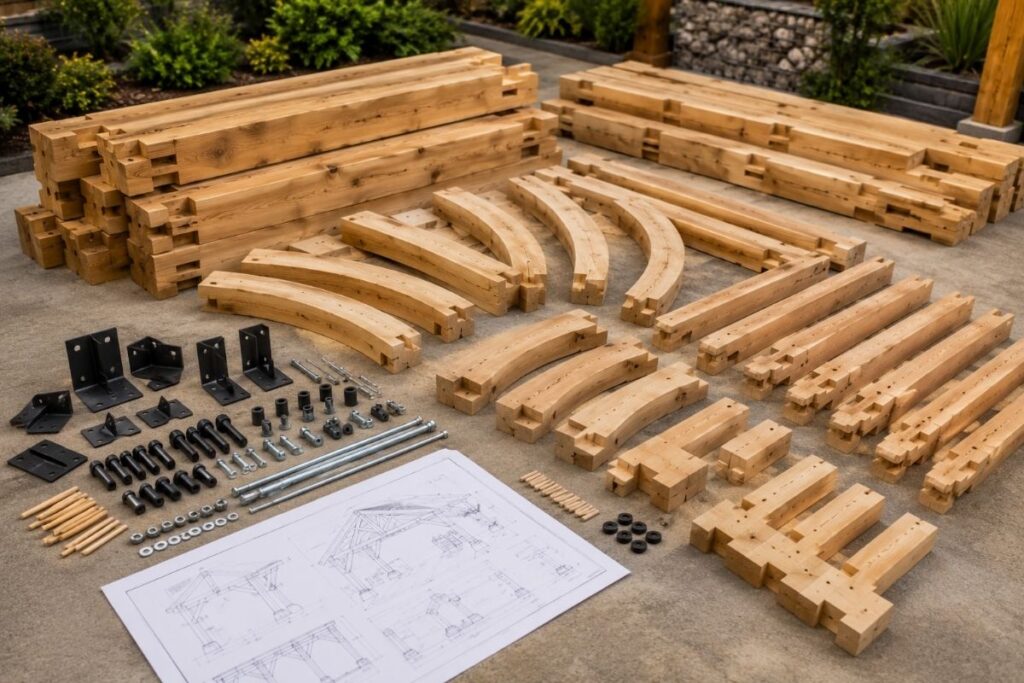
A real kit ships as a complete system. Not just lumber and a hope.
Posts and Beams
These arrive precision-cut at the factory. Joinery is already shaped, ready for assembly on site.
Hardware
Wooden pegs, dovetail connectors, or steel gussets hold everything together. Quality kits skip the flimsy brackets.
Plans and Drawings
Shop drawings show exactly where each piece goes. Good kits include step-by-step instructions, not vague diagrams.
What’s Usually Missing
Roofing material. Concrete for footings. Stain or sealant. Budget for these separately, since most kit prices don’t include them.
Timber Frame Pergola Kit Costs in 2026
Pricing depends heavily on wood species and how much joinery detail you want.
| Kit Type | Typical Price (10×10 to 12×16) |
| Pressure-treated pine, basic notched joints | $1,500 – $4,000 |
| Cedar, mid-range joinery | $4,000 – $9,000 |
| Douglas fir, traditional mortise and tenon | $9,000 – $20,000+ |
| Large-span, dovetail or custom truss kits | $15,000 – $30,000+ |
A simple 10×10 kit might cost under $4,000. A premium Douglas fir design with dovetail joinery can run well past $15,000 once you factor in shipping and a larger footprint.
What Pushes the Price Up
Span width matters most. Wider gaps between posts need heavier beams.
Joinery style adds cost too. Dovetail and mortise and tenon connections take more shop time than a basic notch.
Finish level plays a role as well. Pre-stained kits cost more than raw lumber you finish yourself.
Kit vs Custom Build: Which Saves You More?
A kit saves money on design and labor. A custom build saves you from compromise.
Go with a kit if your site is a standard rectangle and you’re comfortable with a manufacturer’s existing truss options. Assembly is faster, and pricing is more predictable.
Go custom if your yard has an odd shape, a slope, or you want a span the standard kits don’t offer. You’ll pay more, but the structure fits your space instead of the other way around.
Wood Species: What’s Worth the Upgrade?
Wood choice changes your price, your maintenance schedule, and how the pergola ages.
Pressure-Treated Pine
The budget pick. Resists rot reasonably well but needs more frequent resealing than premium species.
Cedar
Naturally rot-resistant. Ages into a rich, silvery tone if left unstained, or holds color well if sealed.
Douglas Fir
The strength leader. Straight grain, fewer knots, and better load capacity for wider spans.
Attached or Freestanding? Picking Your Layout
This choice affects both your kit selection and your final cost.
Attached kits anchor into your home’s existing structure. Fewer posts, lower material cost, and a more seamless look against your house.
Freestanding kits stand entirely on their own footings. More expensive, but you can place them anywhere in the yard.
Truss and Roof Styles to Choose With
Most manufacturers offer a handful of standard truss patterns. Each changes the look more than the function.
King post trusses are the simplest and cheapest, with a single central support.
Queen post trusses use two posts instead of one, opening up a wider clear span underneath.
Dovetail designs skip trusses entirely, relying on interlocking beam joints for a cleaner, more minimal profile.
How to Spot a Quality Kit Before You Buy
Not every “timber frame” label means real timber framing. Ask these questions first.
Is the joinery real?
Look for actual mortise and tenon or dovetail cuts. Some budget kits just bolt square posts to beams and call it timber frame.
What’s the wood grade?
Kiln-dried, structurally graded lumber holds up. Anything ungraded is a gamble.
Is there a warranty?
A reputable manufacturer backs the lumber against rot for at least a few years, often five or more.
Can you see real installs?
Photos from a manufacturer’s own backyard mean nothing. Ask for completed projects in climates similar to yours.
Timber Frame Pergola Kits: Are They Worth It for Your Yard?
For most homeowners, yes. You get real joinery and solid wood at a fraction of a fully custom build’s price.
The exception is an unusual lot. If your space doesn’t match standard dimensions, a custom design earns its higher cost.
Frequently Asked Questions
How long does it take to assemble a timber frame pergola kit?
Most standard kits go up in a single weekend with two or three people. Larger spans or dovetail joinery can stretch assembly closer to three or four days.
Do timber frame pergola kits include the roof or cover?
Rarely. Most kits cover the posts, beams, and hardware only. Roofing panels, retractable canopies, and stain are typically separate purchases.
Can I install a timber frame pergola kit myself?
Yes, for most standard sizes. You’ll want at least one other person to help lift beams into place, and a basic understanding of how to read shop drawings.
Is a more expensive kit always better quality?
Not always. Price often reflects wood species and joinery complexity rather than overall build quality. Check warranty terms and lumber grading before assuming a higher price means a better kit.
Conclusion
A timber frame pergola kit gets you real craftsmanship without a custom builder’s price tag, but only if you buy from a manufacturer using actual joinery and graded lumber. Match the kit type to your site, confirm what’s included before you check out, and don’t assume the most expensive option is automatically the best one for your yard.