
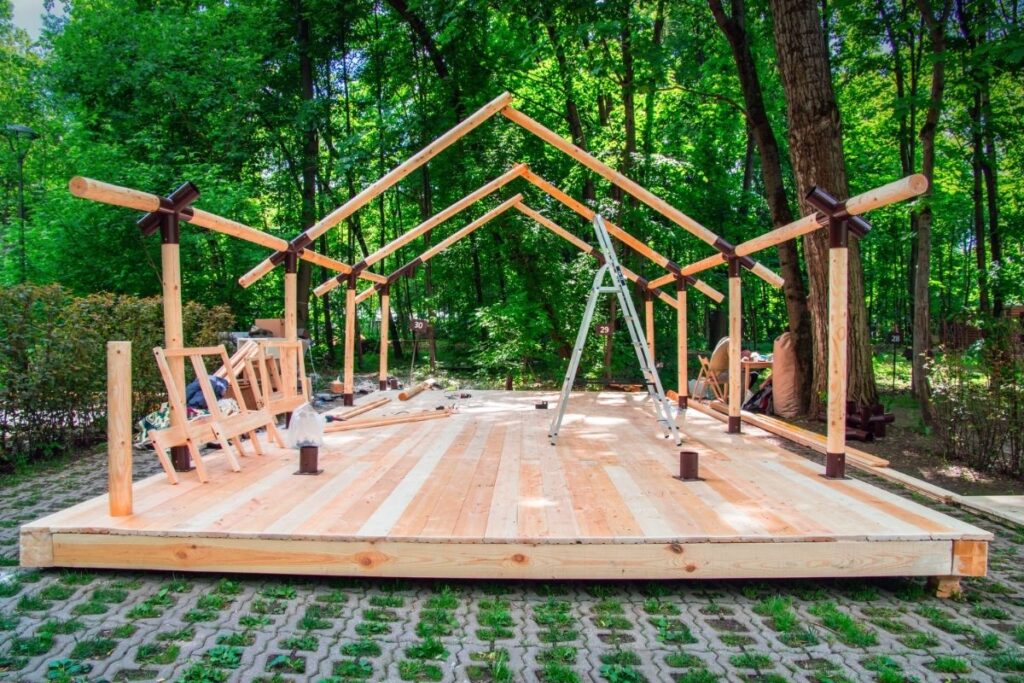
A timber frame pavilion kit gives you the look of a custom-built structure without the custom-build price tag. Everything arrives pre-cut, pre-engineered, and ready to assemble, so you skip the design phase and most of the labor cost that comes with a fully built pavilion. Before you order one, it helps to know what’s actually included in a kit, what sizes and styles are available, and how to tell a good kit from a corner-cut one.
What Is a Timber Frame Pavilion Kit?
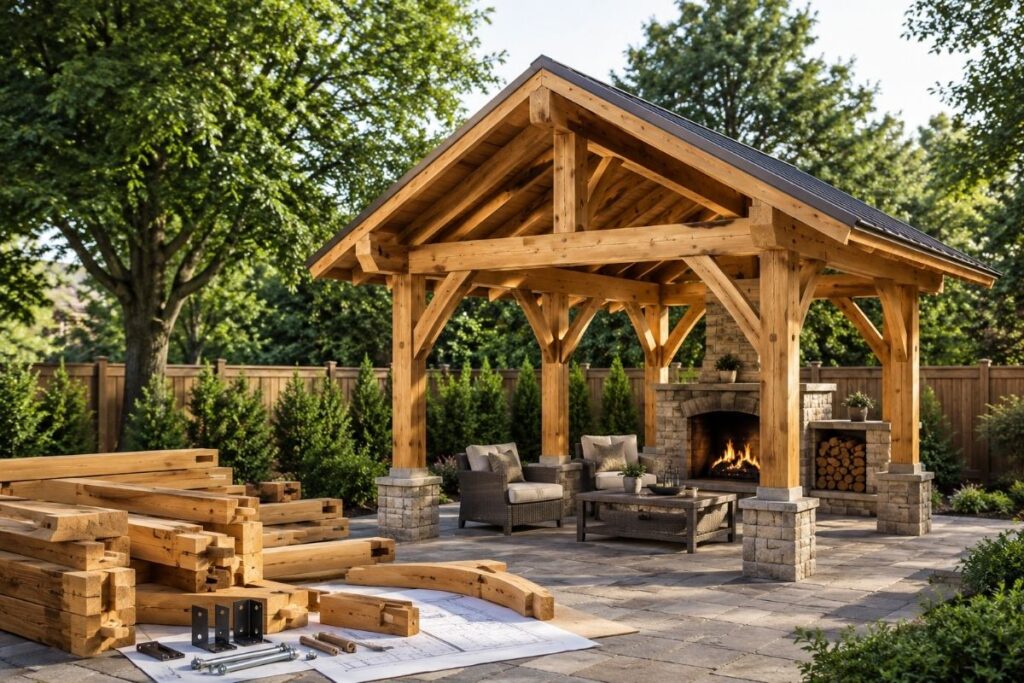
A timber frame pavilion kit is a pre-engineered package of precision-cut timbers, hardware, and plans that you or a local crew assemble on site. The posts and beams are already milled and joined using mortise and tenon cuts, so the heavy craftsmanship is done before the kit ever reaches your property.
Most kits include shop drawings, a full hardware set, wooden pegs or metal connectors, and step-by-step assembly instructions. Some companies also offer optional professional raising services if you’d rather not handle that part yourself.
What’s Typically Included in a Kit
Kit contents vary a bit by manufacturer, but a solid kit should include a few essentials at minimum. You should get precision-cut timber posts, beams, and trusses, along with all the connection hardware, including pegs, brackets, and anchors. A good kit also comes with detailed shop drawings and assembly instructions, plus a material list specific to your chosen size and style.
Roofing material, concrete, and final finishing supplies are usually sold separately, so check the fine print before you assume your quote covers everything.
How Much Do Timber Frame Pavilion Kits Cost in 2026?
Kit pricing this year tends to fall between $7,000 and $25,000, depending on size, wood species, and truss complexity. Larger or more elaborate designs, like hammerbeam trusses or wide clear-span layouts, push toward the higher end of that range.
Typical Kit Pricing by Size
Here’s a general breakdown of what you can expect to pay for the kit itself, before installation, roofing, or site prep.
| Pavilion Size | Typical Kit Price |
| 10×10 to 12×12 | $7,000 – $12,000 |
| 14×16 | $10,000 – $15,000 |
| 18×24 | $15,000 – $20,000 |
| 24×30 and larger | $20,000 – $30,000+ |
Remember that these figures cover the kit components only. Concrete footings, professional installation, and roofing materials are typically quoted separately.
What Affects Kit Pricing
A few details consistently change the final number on your invoice. Wood species plays a big role, since eastern white pine is the most affordable option while Douglas fir, cedar, and oak all cost more. Truss style matters too, as a simple king post design costs less than a queen post or hammerbeam build. Span width factors in as well, because wider clear spans need larger beams and more material overall. Finally, the finish level makes a difference, since pre-stained or pre-sealed timbers cost more than raw, unfinished lumber.
Best Wood Options for a Pavilion Kit
The wood species you choose affects both price and longevity, so it’s worth understanding the trade-offs before you order.
Eastern White Pine
This is the standard choice for most pre-cut kits. It’s affordable, takes stain well, and gives you that classic rustic timber frame look without the premium price.
Douglas Fir
Known for its strength and straight grain, Douglas fir holds up better against decay and insects than pine. It’s a smart upgrade if your pavilion will see heavy use or sit in a harsher climate.
Cedar
Naturally resistant to rot, cedar has a rich color that weathers gracefully over time. It costs more than pine but needs less maintenance long term.
Popular Kit Styles and Truss Designs
Kit manufacturers typically offer a handful of standard truss styles, each with its own look and structural profile.
King Post Truss
The most common and budget-friendly option. A single central post supports the roof ridge, which keeps both the design and the price simple.
Queen Post Truss
Two vertical posts replace the single king post, opening up a wider span underneath. This style works well if you want more open space for seating or dining.
Hammerbeam Truss
The most dramatic option on the market. Hammerbeam trusses create a tall, open feel and are a favorite for wedding venues and commercial event spaces.
Mono-Slope Kits
A single-pitch roof design that looks more modern and pairs well with contemporary homes or structures attached to an existing building.
Kit vs Custom Build: Which Should You Choose?
This comes down to budget, timeline, and how much control you want over the final design.
A kit makes sense if you want a proven design, a faster timeline, and a lower overall cost. Most standard pavilions go from foundation to finished roof in two to five days once the frame arrives, weather permitting.
A custom build makes more sense if your site has an unusual shape, you want a non-standard size, or you’re planning a commercial space that needs specific code compliance. You’ll pay more, but you get a structure built around your exact requirements instead of fitting your space to an existing template.
How to Choose a Quality Timber Frame Pavilion Kit
Not all kits are created equal, so it pays to ask the right questions before you buy.
Start by asking about the wood grading, and look for kiln-dried or air-dried lumber graded specifically for structural use.
It’s also worth checking the warranty, since a reputable manufacturer typically offers at least a one-year warranty on workmanship and a longer warranty, often five years or more, against rot and decay.
Make sure to confirm exactly what’s included, and get a written list of everything that ships with the kit, including hardware, pegs, and fasteners. Ask about local code support too, since some manufacturers provide engineering stamps or documentation to help with permitting in your area.
Finally, take a close look at real installations, because photos of completed projects in climates similar to yours tell you more than a product page ever will.
Finally, take a close look at real installations, because photos of completed projects in climates similar to yours tell you more than a product page ever will. Looking at finished examples such as the Timber Frame Pavilion (Lt) or the Timber Frame Pavilion (Light Timber) for Canada is a useful way to see how different truss styles and finishes hold up once a kit is actually assembled on site.
Assembling Your Kit: What to Expect
Most kits follow a similar assembly sequence, whether you’re doing it yourself or hiring a local crew.
It starts with preparing your foundation, since footings or a concrete pad need to be in place and cured before the frame arrives.
From there, you’ll unload and sort the timbers, which typically arrive labeled and bundled by section to make assembly easier to follow.
Next comes raising the posts and beams, a step that often calls for a few extra people or rental equipment depending on the size of your pavilion.
Once the frame is standing, you’ll install the trusses and roof structure, followed by the roof decking.
The last stage is adding roofing material and finishing touches, including shingles, metal panels, stain, and any electrical work.
Many manufacturers include instructional videos alongside the printed plans, which makes this part far less intimidating than it sounds.
Frequently Asked Questions
Are timber frame pavilion kits easy to assemble yourself?
Yes, for the most part. Most kits arrive pre-cut and labeled with detailed instructions, though raising the heavier beams usually requires a few extra people or basic lifting equipment.
What’s not included in a typical pavilion kit?
Most kits don’t include roofing material, concrete for the foundation, or professional installation labor. Always confirm exactly what’s covered before you order.
Do pavilion kits come with a warranty?
Most reputable manufacturers offer at least a one-year warranty on workmanship, with longer warranties of five years or more specifically covering the lumber against rot and decay.
How long does it take to assemble a pavilion kit?
A standard-size kit typically takes two to five days to fully assemble, including the roof, assuming the foundation is already in place and the weather cooperates.
Final Thoughts
A timber frame pavilion kit is one of the most practical ways to get real heavy-timber craftsmanship without paying for a fully custom build. Stick to a reputable manufacturer, get clear on exactly what ships in the box, and budget separately for roofing and site prep so there are no surprises once the timbers show up at your door.